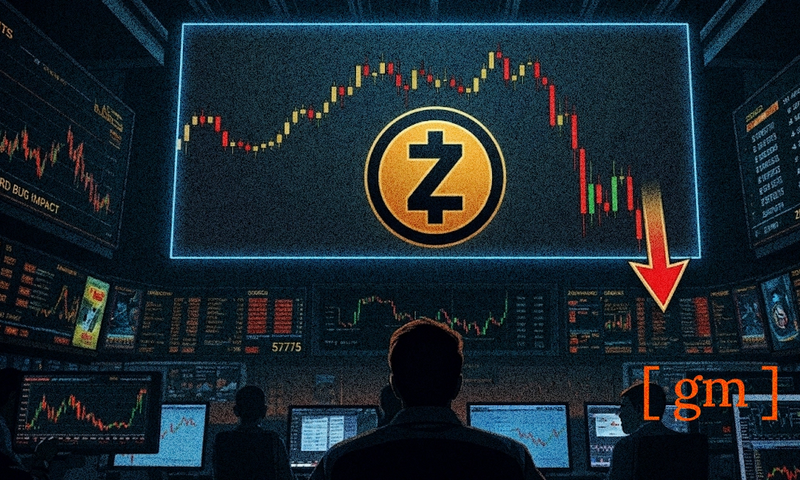
The privacy-focused cryptocurrency Zcash (ZEC) has suffered a brutal market shock, plunging from a high near $640 down toward the $240–$300 range in under two days. The dramatic sell-off has wiped out millions in retail capital, shifting focus to a long-hidden vulnerability and some incredibly well-timed short positions by major crypto whales.
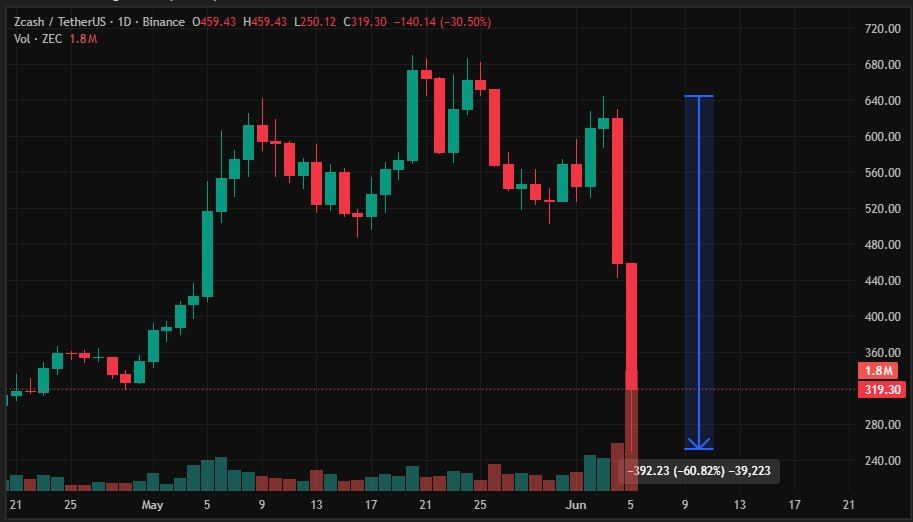
The sudden drop was triggered by the disclosure of a severe "soundness bug" in Orchard—the shielded pool used by Zcash to process completely private, anonymous transactions.
According to security reports, the cryptographic flaw theoretically allowed an attacker to create a complete exploit to mint an unlimited amount of counterfeit ZEC completely undetected.
The most alarming detail? The bug had quietly existed in the Zcash codebase since Orchard was launched in May 2022. It sat there completely unnoticed for four years until independent security researcher Taylor Hornby uncovered it on May 29, 2026, using advanced AI-assisted auditing tools.
Suspicious Timing and Whale Shorts
While Zcash developers acted fast—deploying a series of emergency network upgrades to permanently patch the circuit by June 1–2—the market reaction was absolute chaos.
What is raising eyebrows across crypto communities is the timing of the discovery. ZEC had been riding an aggressive wave of bullish momentum, heavily backed by institutional interest and heavily accumulated by retail investors right at the highs.
Just as the network vulnerability came to light, several prominent whales and market insiders reportedly loaded up on massive short positions, perfectly positioning themselves to capture the cascading liquidations on the way down. Notably, prominent figures like BitMEX co-founder Arthur Hayes publicly announced they had exited their positions right as the volatility unraveled.
[Retail FOMO near $640] ➔ [Orchard Bug Disclosed] ➔ [Whale Shorts Triggered] ➔ [50% Crash to ~$300]
Coincidence or Calculation?
The Zcash ecosystem's internal "turnstile" monitoring indicates that no actual supply inflation occurred during the four years the bug was live. However, because of Orchard's absolute privacy features, proving with 100% cryptographic certainty that nobody ever exploited it is incredibly difficult—leaving a lingering cloud of FUD (Fear, Uncertainty, and Doubt).
Whether the sudden discovery and the simultaneous whale shorts were a calculated market manipulation or just an unfortunate coincidence depends on who you ask. For the retail investors who bought the top, the result remains a painful reminder of how fragile privacy-tech premiums can be.
What the Crypto Space is Saying
@Polymarket
JUST IN: Claude Opus 4.8 reportedly found a critical Zcash bug that could have allowed attackers to create unlimited coins.
@ArthurHayes
Read the details on the Zcash loophole, saw the 30% pullback, and decided it was time to close out the position for a clean profit. On to the next.
@ZcashFanatic
The bug was patched on June 1st before the public even knew. The network is safer today than it was last week. This is just a massive stop-loss hunt by institutions trying to shake out weak retail hands. Don't fall for the FUD.