Iran’s Foreign Minister Seyed Abbas Araghchi announced on April 17 that the Strait of Hormuz has been reopened to commercial shipping. This move is tied to a 10-day ceasefire between Israel and Lebanon that begins today.
However, the reopening comes with restrictions. Ships must travel along routes coordinated by Iran’s Ports and Maritime Organisation, and access will only remain available for the duration of the ceasefire.
Oil Prices Drop as Supply Concerns Ease
Following the announcement, energy markets reacted sharply. Brent crude declined by 6.84%, falling from $99.39 on April 16 to roughly $92, while US crude saw a similar drop of 7.04%.
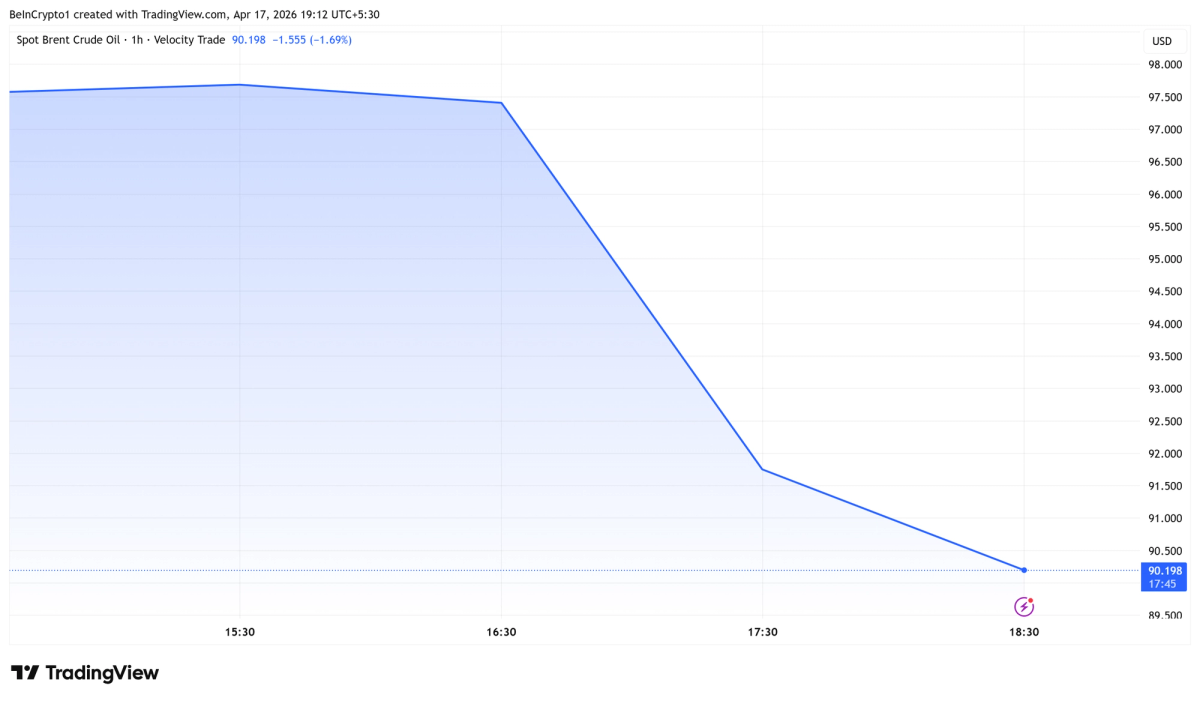
The Strait of Hormuz is a critical route, carrying about 20% of global daily oil and LNG shipments. Iran had previously limited access during the conflict, which helped push Brent prices above $100 earlier in the month.
Investors had already anticipated a possible de-escalation. Prices had slipped below $95 on April 14 after the White House indicated progress in negotiations between the US and Iran.
Trump Responds, Markets Turn Positive
US President Donald Trump quickly commented on Truth Social, stating that the “Strait of Iran” was fully open for passage—using an incorrect name for the waterway.
His statement implied complete access, though in reality Iran’s conditions restrict usage to specific routes and only for the ceasefire period.
Other markets also reacted positively. Bitcoin rose by 1.59%, and the S&P 500 posted a modest 0.07% gain, signaling a broader shift toward risk-taking.
Uncertainty Remains
Despite the immediate market relief, the situation is still fragile. The US-Iran ceasefire is set to end on April 21, and any breach of the Israel-Lebanon truce could lead to renewed restrictions. Larger issues, including Iran’s nuclear program and ongoing sanctions negotiations, are still unresolved.
To read the latest cryptocurrency market analysis, click here.