
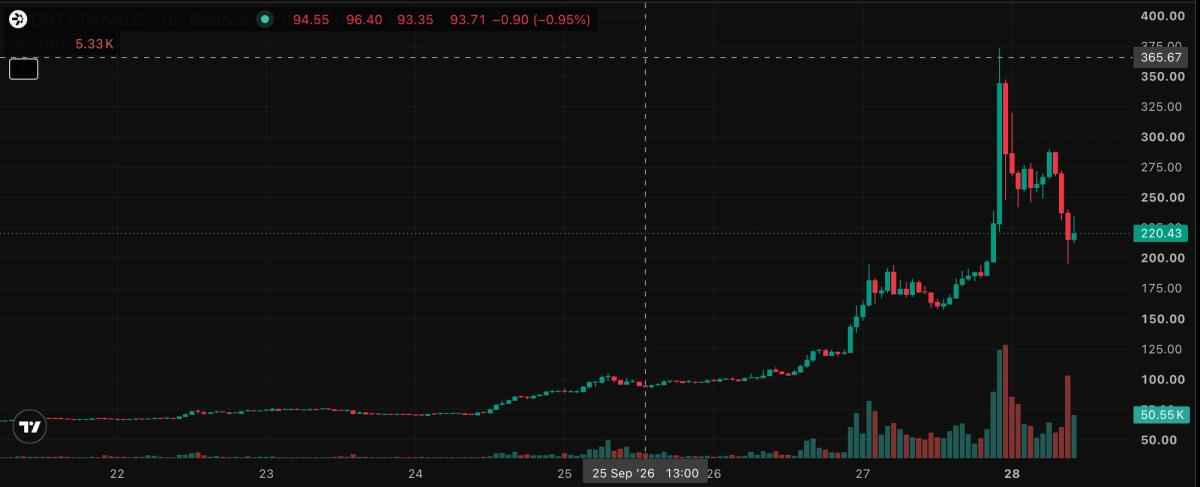
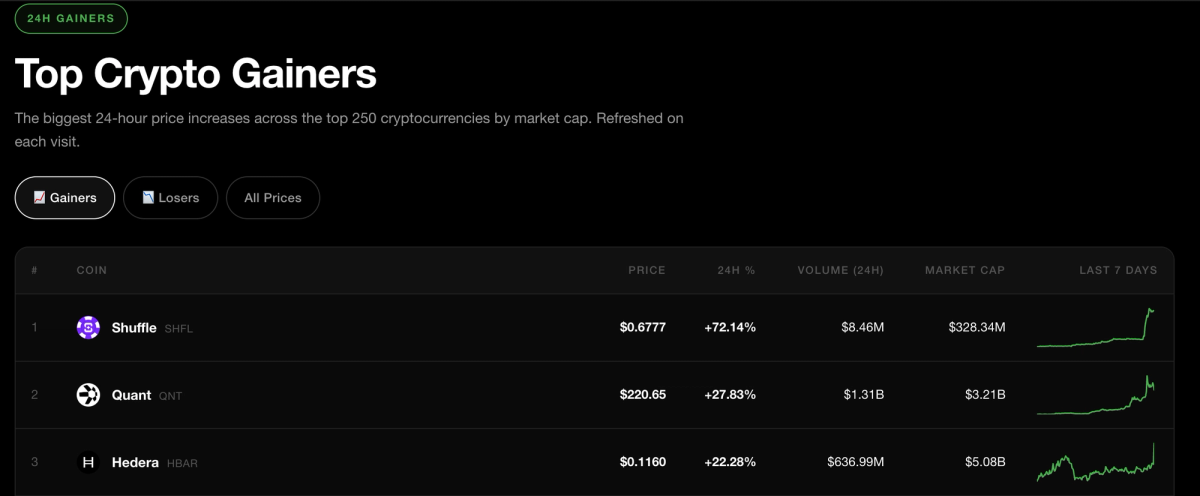
While most of the crypto market slipped this week, one token went vertical. Quant's QNT surged more than 50% in a single day, and roughly 158% over the week, making it one of the best-performing established tokens of the cycle. The catalyst is genuinely significant: a deal that plugs Quant directly into the plumbing of the US banking system. But there's an important catch beneath the rally that every buyer should understand before chasing it.
The catalyst
On September 24, The Clearing House selected Quant to provide the technology for its On-Chain Money Initiative, a new network designed to clear and settle tokenized-deposit transactions between banks. The initiative is backed by 25 major US banks and is targeted to launch in the first half of 2027.
Why this matters so much comes down to who The Clearing House is. It's not a startup, it's a payments operator owned by many of the largest US banks, and it runs core national rails including the ACH network and the RTP real-time payments system, moving over $2 trillion in daily transaction volume. For Quant, whose entire pitch has always been "enterprise plumbing" (connecting existing bank systems to blockchains without ripping out what they run today), being chosen to power this network is a landmark validation of its business model.
What are tokenized deposits, anyway?
Since this is the heart of the deal, it's worth explaining. A tokenized deposit is a digital, blockchain-based representation of money you hold in a regular bank account. Unlike a stablecoin (issued by a private company), a tokenized deposit stays on the bank's balance sheet, it's your actual bank money, just made programmable so it can move on blockchain rails. Banks like the idea because it lets them offer instant, programmable, 24/7 payments without moving money off their books or ceding ground to stablecoin issuers. Quant's role is to provide the interoperability layer that lets these different banks' systems talk to each other.
The catch: the company won this deal, not necessarily the token
Here's the nuance that most of the excited coverage soft-pedals, and it's the most important thing for anyone thinking about buying QNT.
The deal is between The Clearing House and Quant the company. Whether, and how, the QNT token economically benefits is a separate question. As critics have pointed out, neither The Clearing House nor Quant has said the QNT token is required for the tokenized-deposit network to function. In other words, banks could use Quant's software without the token playing a meaningful role in the value flow. Treating the corporate win and the token's value as the same thing means buying an expectation, not a confirmed connection.
There are also warning signs in the rally itself. One analysis flagged that a large share of QNT's trading volume during the surge showed characteristics of wash trading (artificial volume that inflates the appearance of demand), and technical indicators show QNT's RSI hitting extremely overbought levels, a classic signal of high pullback risk after a parabolic move. The rally also landed in a "greedy" market primed to chase any catalyst, which likely amplified the move beyond what the fundamentals alone justify.