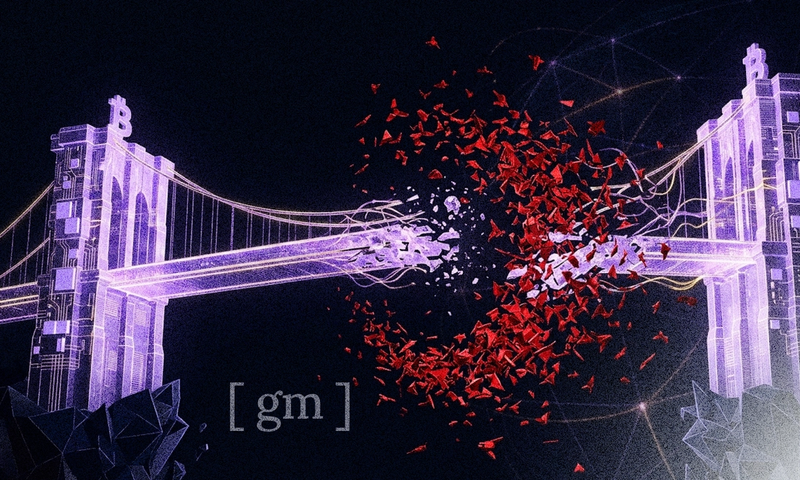
On August 3, Boltz one of the most widely used non-custodial bridges for moving Bitcoin between the mainchain, the Lightning Network, and the Liquid sidechain suspended all of its swap services indefinitely. Notably, this wasn't a shutdown forced by a successful drain. Boltz pulled the plug voluntarily, saying it could no longer safely operate because AI-assisted attackers were discovering and weaponizing vulnerabilities faster than its team could fix them.
What Boltz actually said. The company was explicit that this was a pattern, not a single incident. Over recent months, it had seen a steady rise in automated, AI-assisted probing of its infrastructure and had dealt with several exploit attempts each one contained, but the cadence kept accelerating. In its own words, "attackers now iterate faster than a team our size can find and patch." After reviewing its latest internal security scans, Boltz concluded it couldn't responsibly re-enable swaps while being actively targeted by what it described as multiple well-resourced groups. There's no ETA for a return.
Were user funds lost? No. Because Boltz is non-custodial, users retained control of their assets throughout the design meant a compromise of Boltz's infrastructure did not put customer funds directly at risk. The company kept its refund process (which doesn't depend on the affected infrastructure) and support channels open. That's the one piece of good news here: the architecture did its job even as the service failed.
The knock-on effect. Boltz was a piece of Bitcoin's interoperability plumbing, so its pause rippled outward immediately. Wallets and services that relied on it for Lightning and Liquid swaps including Bull Bitcoin, the Aqua wallet, and the ZEUS Lightning wallet warned users that swaps would fail or be unavailable while they scrambled for alternatives. When a shared piece of infrastructure goes dark, everything built on top of it feels it.
Why this is bigger than one bridge. Boltz itself called this "a major paradigm shift for Bitcoin services operating on an open-source stack." Here's the uncomfortable logic: open-source code is public, which is normally a security strength anyone can audit it. But AI tools can now scan that same public code for weaknesses at machine speed, industrializing the hunt for bugs. A small, well-meaning team shipping open-source infrastructure suddenly faces an attacker that never sleeps, never tires, and iterates in minutes. Defense is still mostly human-speed; offense just went machine-speed.
It's not an isolated event. Boltz's shutdown lands in the same week that the Coldcard hardware wallet exploit now linked to over $100 million in stolen Bitcoin was itself reportedly connected to AI-assisted software. Two of the most respected names in Bitcoin's self-custody and interoperability world, hit in the same window, by the same broad category of threat. Security researchers have been warning about exactly this: as one industry security chief put it recently, humans can't scale enough to meet machine-speed attacks, and the only real answer may be autonomous defense systems that operate at the same speed as the offense.
The irony worth sitting with. Both stories point the same uncomfortable direction. When self-custody hardware fails, people move coins back to exchanges. When a small non-custodial bridge fails, people lean on big centralized alternatives. AI-assisted attacks are quietly pushing crypto back toward the large, well-resourced custodians it was originally built to escape because only the biggest players can afford the security teams this new threat demands. (We explore that dynamic in depth in a companion piece.)
The European/CEE angle: much of the open-source Bitcoin and Lightning tooling that powers self-sovereign crypto use the kind that matters enormously in regions like Eastern Europe and Ukraine, where non-custodial tools are practical necessities is built and maintained by exactly the kind of small teams Boltz described. If machine-speed attacks make it unsustainable for small teams to safely run open infrastructure, the tools that give individuals independence from big institutions are the ones most at risk of disappearing. That's a strategic concern, not just a technical one.
What to watch: whether Boltz returns and how, whether other small Bitcoin/Lightning services pause pre-emptively, whether this accelerates adoption of AI-powered defensive security, and whether the broader market starts pricing in "small open-source team" as a risk factor.