
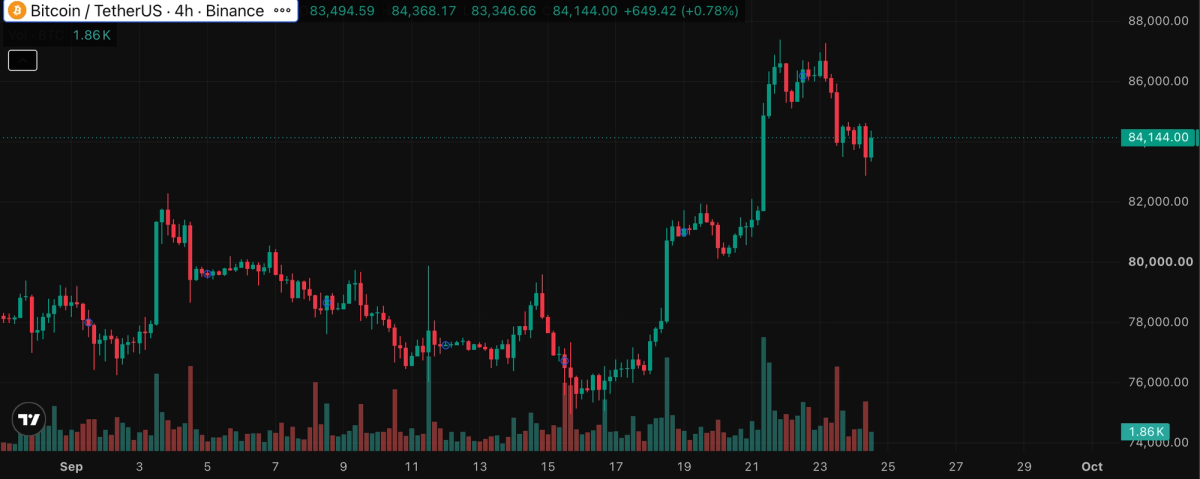
The relief rally didn't last long. Just a day after Bitcoin touched an eight-month high and some analysts declared the "crypto winter over," prices reversed sharply. Bitcoin fell back toward $84,000, dragging the market down with it, as renewed fears of Federal Reserve rate hikes and a surging US dollar drained the risk appetite that had fueled the recovery. It's a stark reminder that crypto's direction, for now, is being dictated by macro forces far more than by anything happening on-chain.
The numbers
Bitcoin dropped about 2-2.7% to trade around $84,000-$84,400, down from the ~$87,300 eight-month high it reached just a day earlier. Ethereum fell in tandem, opening at $2,684 and sliding toward $2,646, down about 2.5%. The pullback triggered roughly $513 million in liquidations across the crypto market as leveraged bullish positions were forced to close.
Why it's falling: the Fed and the dollar
The reversal comes down to two intertwined macro forces.
Rising rate-hike expectations. Widespread inflation concerns have increased the odds that the Fed will raise rates not just once more this year, but possibly twice. According to the CME FedWatch tool, there's now a 75.3% chance of a rate hike in October and a 58.6% chance of another in December. Higher rates tighten financial conditions and pull money away from risk assets like crypto.
A surging dollar. The US Dollar Index climbed to 101.231, its highest reading since late July, up about 2.5% from its September 9 low. A stronger dollar is typically a headwind for Bitcoin, which often moves inversely to it: when the dollar strengthens, dollar-priced risk assets tend to weaken. The dollar's rise is itself being driven by those same rate-hike bets, higher expected US rates make the dollar more attractive to hold.
Together, these forces reversed the exact conditions that powered the recent rally. Days ago, falling yields and renewed risk appetite sent Bitcoin to $87K; now, rising rate expectations and a firmer dollar have pulled it back.
The whiplash context
This week captures crypto's macro-driven volatility in miniature. On Wednesday, the market opened at eight-month highs, nearly $1 billion flooded into Bitcoin ETFs, and optimism was running high enough that analysts were calling the downturn over. By Thursday morning, that narrative had flipped, prices opened sharply lower and kept sliding as US markets woke up to the stronger rate-hike odds. It's the same push-and-pull that has defined September: every time crypto builds momentum, a shift in the macro backdrop, inflation data, Fed expectations, the dollar, knocks it back.
Importantly, this is a pullback, not a collapse. Bitcoin remains far above its mid-month lows near $75,000, and the broader recovery structure is still intact for now. A 2-3% dip after a sharp multi-day run is normal, even healthy, price action rather than a trend reversal. But it underscores how fragile the rally's footing is while the Fed's next move remains uncertain.
Why it matters
The lesson of the past 48 hours is one crypto keeps relearning in 2026: the market is trading on macro, not fundamentals. Bitcoin's move from $87K back to $84K wasn't caused by anything in crypto, it was caused by inflation worries, rate-hike odds, and the dollar. For anyone watching the volatility, the takeaway isn't panic; it's recognition that until the Fed's rate path becomes clearer, likely not before the October FOMC meeting, crypto is going to keep taking its cues from Washington and the bond market. The rally proved crypto's underlying demand is real. This pullback proves that demand still can't outrun the Fed. The next major test is the October rate decision, and between now and then, expect the whipsaw to continue.