Every few months, a headline warns that quantum computers are about to break Bitcoin and drain everyone's wallets. Every few months, someone else says it's decades away and nothing to worry about. This week, Binance's security chief stepped into that noise with a measured answer, and it's worth understanding, because both the panic and the dismissal miss the real picture. The honest version: no quantum computer can touch your crypto today, but the timeline for when one might is shrinking, and the fix is harder than it sounds.
What Binance actually said. In an August 11 post addressing five common questions about quantum computing, Binance Chief Security Officer Jimmy Su said plainly that "current quantum computers are nowhere near the scale and reliability needed to break the cryptography protecting digital assets." He framed quantum as a long-term security concern, not an immediate threat, and said no emergency action is required from ordinary holders. That's the reassuring headline. But Binance also stressed it's actively preparing, which tells you the industry doesn't treat this as science fiction.
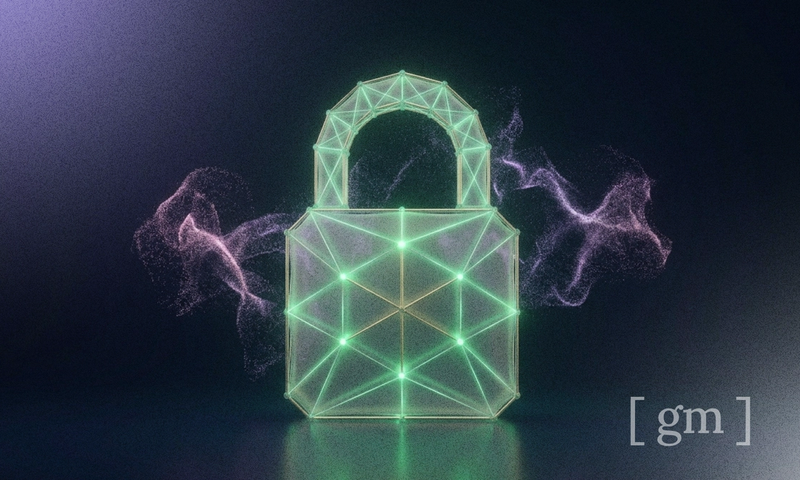
The threat, in plain English. Bitcoin wallets are protected by elliptic-curve cryptography (specifically a curve called secp256k1). The security rests on a math problem that's effectively impossible for normal computers to reverse: you can't work backward from a public key to the private key that controls the coins. A sufficiently powerful quantum computer, running an algorithm known as Shor's algorithm, could in theory solve that problem, deriving the private key from an exposed public key, and take the coins. The lock that protects every Bitcoin wallet would suddenly have a master key.
Why the mood shifted: Google keeps lowering the bar. The reason this stopped being a purely theoretical debate is a series of research results, most importantly a Google Quantum AI paper from March 2026. It estimated that breaking Bitcoin's encryption might require fewer than 500,000 physical qubits, roughly 20 times fewer than earlier projections that had put the number in the millions. One model described cracking a private key in as little as around nine minutes after a transaction exposes the public key. Google set a 2029 target to migrate its own systems to quantum-resistant cryptography, and some researchers now put a meaningful (double-digit) probability on a Bitcoin-breaking machine existing by the early 2030s. The estimates keep moving in one direction: sooner.
The uncomfortable number: ~6.9 million BTC exposed. Here's the part specific to crypto. According to the Google paper, roughly 6.9 million bitcoin, about a third of the total supply, sit in wallets whose public keys have already been revealed on-chain. That includes early-era coins (think long-dormant wallets, potentially including Satoshi's) and any address that's been reused. Those are the coins most exposed to a future quantum attacker. Coins in addresses that have never spent, and therefore never revealed a public key, are far safer, which is why "use a fresh address for every transaction" is quietly becoming quantum-hygiene advice.
Now the crucial context, because the panic overshoots. Several of the field's most credible voices urge calm. Blockstream CEO Adam Back argues the practical threat is 20 to 40 years out. ARK Invest recently placed us at "Stage 0", quantum computers exist but have no commercially relevant capability yet. Public quantum machines today operate in the tens of logical qubits, a staggering distance from the hundreds of thousands to millions of high-quality qubits an attack would require, and closing that gap isn't a simple linear climb; it means solving enormous problems in error correction, stability, and speed simultaneously. Expert surveys reflect the uncertainty: one put the odds of a cryptographically relevant quantum computer within 10 years at roughly 28-49%, rising past 50% only on a 15-year horizon. In short: real, but not imminent.
The fix exists, and that's where it gets tricky. Post-quantum cryptography, encryption designed to resist quantum attacks, already exists; the US standards body NIST finalized several such standards in 2024. The problem isn't inventing the lock. It's changing the locks on a moving train that nobody owns. Bitcoin has no CEO to mandate an upgrade; any change requires broad consensus across developers, miners, wallets, exchanges, custodians, and users. Work is underway (a quantum-resistant address type has already been merged into Bitcoin's development repository), but coordinating a migration of this scale, without stranding funds, is a multi-year governance challenge. And there's a subtle danger the other way: as one Google paper co-author warned, a rushed transition could introduce a catastrophic bug more dangerous than the quantum threat itself. The lost and dormant coins, whose owners can never migrate them, remain an unresolved question with no clean answer.
Why it matters. The quantum threat is the mirror image of the AI-security story shaking crypto right now: where AI is a fast-moving danger already causing real losses, quantum is a slow-moving one that's still years off, but potentially far more fundamental, because it strikes at the cryptography underpinning the entire system, not just one wallet's firmware. Both share a lesson: crypto's security is not static, and "set it and forget it" is not a strategy. The networks that prepare calmly and early, without rushing into fragile fixes, are the ones that will still be standing when the hardware finally catches up.
What to watch: further reductions in the qubit estimates, IBM's and Google's hardware roadmaps toward 2029-2032, progress on Bitcoin's quantum-resistant address adoption, and whether other major networks (Ethereum, XRP, Sui, and others have announced post-quantum plans) set concrete migration deadlines.