Two Layer-1 blockchains, Injective and Ontology, both halted block production around August 31 amid security concerns, but the two events are very different, and it's worth being precise about which is which.
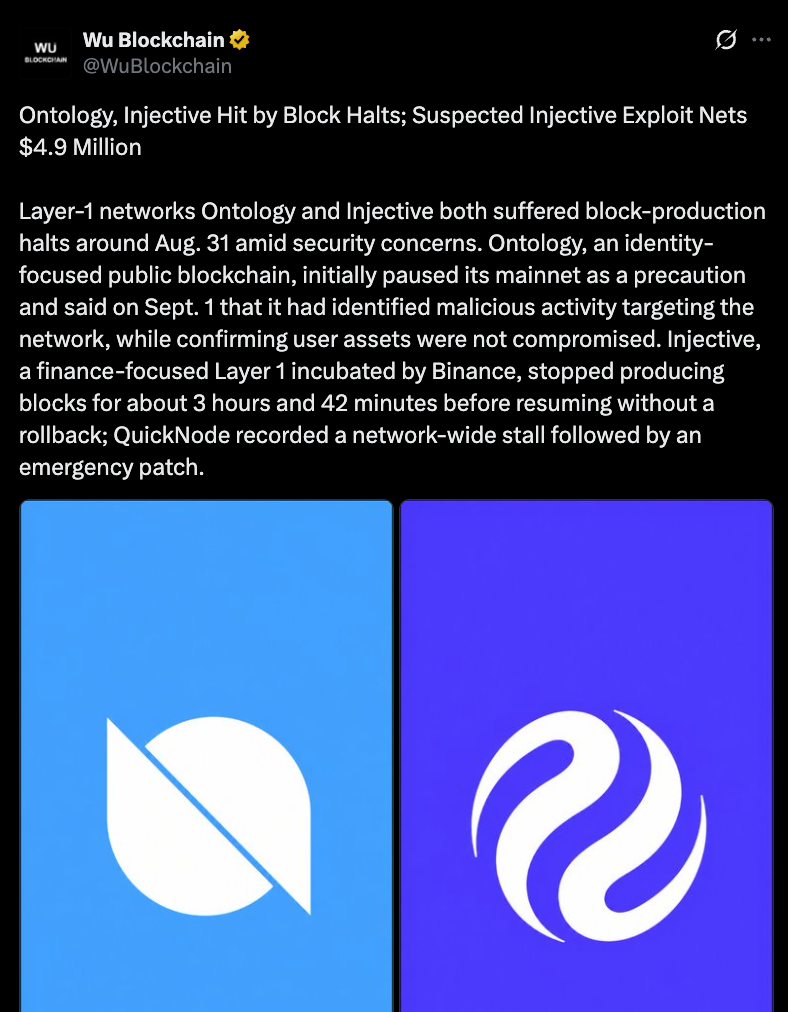
Injective: a confirmed exploit. Injective, a finance-focused Layer 1 incubated by Binance, was exploited for roughly $4.8-4.9 million, with security firm PeckShield listing the loss at about $4.8 million. The chain stopped producing blocks for about three hours and 42 minutes before resuming without a rollback, and infrastructure provider QuickNode recorded a network-wide stall followed by an emergency patch.
According to a technical breakdown circulating among researchers, the root cause was a market identifier collision in Injective's core logic. The protocol reportedly generates a market's ID by concatenating several parameters without separators, which allegedly let the attacker craft an INJ-denominated insurance fund that collided with a USDC-denominated binary-options market. When settlement hit a no-price refund path, the system tried to cover a manufactured USDC deficit using the raw balance of the attached INJ fund, draining assets. (This root-cause analysis comes from independent researchers and should be treated as a strong preliminary explanation pending Injective's own post-mortem.)
The incident also drew criticism over communications: throughout the halt, Injective's official channels reportedly kept posting marketing content, promoting new products without acknowledging the outage, a contrast to how MANTRA and Cronos handled recent incidents.
Ontology: a precaution, not a confirmed hack. Separately, Ontology, an identity-focused Layer 1, paused its mainnet at 09:09 UTC on August 31 after flagging a potential security concern during a routine daily check. Crucially, Ontology explicitly said no security incident was confirmed and that its ONT, ONG, and other on-chain assets appeared unaffected, calling the halt a preventive measure. The team said it would prioritize a thorough review over a fast restart, and Korean exchanges Bithumb and Upbit suspended ONT and ONG transfers as a precaution. On September 1, Ontology said it had identified malicious activity targeting the network while maintaining that user assets were not compromised.
The bigger picture. The two halts land during a rough stretch for on-chain security: crypto hacks rose 67% in August to about $136 million in losses per PeckShield, with Injective among the ten largest named incidents alongside MANTRA, BounceBit, and others. The day also saw a far larger, separate exploit of the Tectonic lending protocol on Cronos. The pattern reinforces something that's become a theme this year: halting a chain, once seen as a failure, is increasingly treated as a legitimate emergency tool to contain damage before funds can escape. Injective chose to patch and resume; Ontology chose to pause and investigate. Both are now standard plays in a crypto-security playbook that's being tested almost daily.