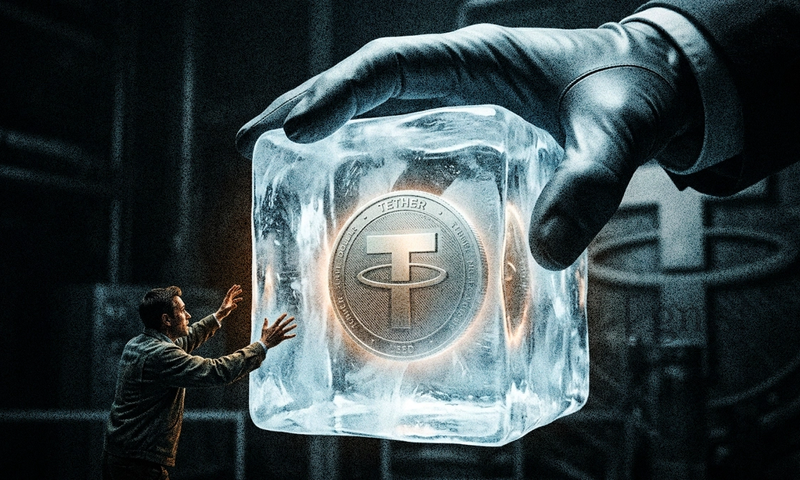
A lawsuit against the world's largest stablecoin issuer is putting one of crypto's most quietly powerful abilities on trial: the power to freeze your money. Cross-border payments firm Conduit Technology has sued Tether, alleging it froze $2.76 million of Conduit's USDT for over a year, without a court order, without explanation, and over a Brazilian investigation that Conduit says never even flagged its wallet. It's the second such freeze lawsuit against Tether in weeks, and it could test the real limits of a stablecoin issuer's control over the tokens people hold.
What Conduit alleges
In a complaint filed October 5 in the US District Court for the Southern District of New York, Conduit says Tether froze $2.76 million in USDT from its treasury wallet on September 24, 2025, and has kept it locked ever since, more than a year. Conduit describes the wallet as its main operating account, the digital equivalent of a company's bank account, and says the freeze forced it to lay off employees and close offices.
The core of Conduit's argument is that the freeze was improper because it had nothing to do with Conduit. The freeze traces to a Brazilian Federal Police investigation into other companies, including a firm called Onix Intermediações, a former Conduit customer. But Conduit says: a Brazilian court confirmed Conduit was not under investigation; Brazilian police never flagged Conduit's treasury wallet for freezing; and the wallet was created in May 2025, about a month after Onix had stopped using Conduit's platform, and never held Onix funds. According to the complaint, Tether's T3 Financial Crime Unit identified the wallet "on its own initiative using its own criteria" and froze it without a specific legal order directing it to do so.
In the four months before the freeze, Conduit says, the wallet had moved more than $1.1 billion across 4,427 transactions with 78 counterparties, none involving Onix.
Why this matters: the power to freeze
Here's what makes this bigger than one company's $2.76 million. Centralized stablecoin issuers like Tether have the technical ability to freeze tokens, to make specific USDT holdings non-transferable, anywhere in the world, almost instantly. This power is genuinely useful: it lets Tether comply with law enforcement, freeze funds from hacks and scams, and block sanctioned addresses, and Tether has frozen large sums tied to real crime. But the same power raises a hard question: what happens when it's used without a court order, and allegedly against the wrong party?
That's the question Conduit's lawsuit puts to the test. The complaint asks whether Tether can produce a valid legal order specifically directing the freeze of Conduit's wallet, or whether it acted on its own judgment. If a stablecoin issuer can lock up a company's operating funds for a year based on its own internal criteria, with no court order and no direct law-enforcement request, that's a profound amount of unilateral control over money people assume is simply "digital dollars."
Not the first, or only, challenge
Conduit's suit is part of a mounting wave. It's reportedly the second freeze lawsuit filed against Tether in the same New York court in weeks, following a separate $42.4 million case brought by two Thai businessmen. Conduit is seeking the return of its $2.76 million, plus at least another $2.76 million in damages, and notably, the interest Tether allegedly earned on the US Treasuries backing the frozen tokens while they sat locked. As of the filing, Tether had not formally responded to the allegations. (It's worth stressing these are unproven claims in active litigation; Tether will have its own account, and the court hasn't ruled.)
Why it matters
This lawsuit cuts to a tension at the heart of stablecoins, the technology quietly becoming the backbone of crypto payments. Stablecoins are praised for being fast, borderless digital dollars, but they come with a feature traditional cash doesn't have: a central issuer that can freeze them. For the stablecoin industry, now worth over $300 billion and increasingly integrated with banks and payment apps, cases like this matter enormously, because mainstream adoption depends on users trusting that their funds can't be arbitrarily locked. For users, it's a reminder of a crucial distinction: holding a centralized stablecoin means trusting its issuer, and that trust includes their freeze power. Whether Conduit wins or loses, the lawsuit forces a public reckoning with a question the industry has mostly avoided: when a private company can freeze your money on its own judgment, how "yours" is it really? The court's answer could help define the rules for the stablecoin era.