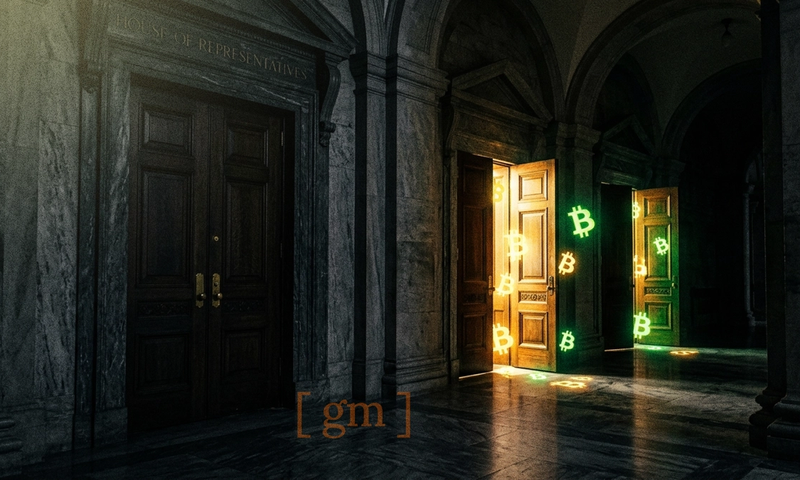
The story out of Washington this week was crypto's big defeat: the Senate killed the CLARITY Act, ending the industry's push for comprehensive market-structure law in 2026. But that headline missed something. In the very same stretch, two other crypto bills quietly moved forward in the House, one to enshrine a national Bitcoin reserve, and one to fix crypto's messy tax rules. The regulatory picture is more nuanced than "crypto lost."
Bill one: a permanent Strategic Bitcoin Reserve
On the same day the CLARITY drama unfolded, the House Financial Services Committee advanced the American Reserve Modernization Act by a 28-21 vote. The bill would codify into law the Strategic Bitcoin Reserve that President Trump established by executive order in 2025, turning a presidential directive into something far harder to reverse.
The details matter. Under the bill, Bitcoin held in the reserve must be kept for at least 20 years, federal agencies would have to report their crypto holdings, and, importantly, the legislation includes protections for Americans' right to self-custody their own crypto. The US government already holds around 328,000 Bitcoin, largely from seizures, so codifying a long-term reserve would lock a substantial national Bitcoin position into law rather than leaving it to the whims of the next administration. It's a milestone in what has become an unusual bipartisan-adjacent fight over whether the US treats Bitcoin as a strategic national asset.
Bill two: crypto tax certainty
The second bill addresses one of crypto users' most persistent headaches: taxes. The House Ways and Means Committee advanced the Digital Asset Tax Certainty Act, reportedly by a lopsided 38-5 vote, signaling rare broad agreement.
The bill would bring practical relief. It proposes a tax exemption for small crypto transactions (gains under roughly $10), which would finally make it feasible to actually use crypto for everyday small payments without triggering a taxable event on every coffee. It also aims to clarify the murky tax treatment of mining and staking rewards and to establish clearer, securities-style rules for crypto lending. For ordinary users, these are the unglamorous but genuinely useful fixes that make holding and using crypto less of a tax minefield.
Why this matters, and the caveats
The takeaway is that CLARITY's failure, while a real blow, didn't freeze all crypto progress in Washington. Different bills, moving through different committees, are still advancing, and they target different things: CLARITY was about market structure (who regulates what), while these address a national reserve and tax rules. Progress on one front doesn't require the others.
But temper the optimism with reality. Committee approval is only an early step, both bills still need to pass the full House, then clear the Senate, the same chamber that just killed CLARITY, before becoming law. Given the compressed congressional calendar heading into the 2026 midterms and the Senate's demonstrated gridlock on crypto, passage is far from guaranteed. Shark Tank investor Kevin O'Leary has argued Congress will face pressure to revive market-structure legislation early next year precisely as these tax and reserve efforts advance, suggesting the crypto-legislation story is paused, not over.