It was a packed end to the week in crypto: a major exchange hack got bigger, Bitcoin cooled off from a multi-month high even as institutional money kept pouring in, and US regulators delivered both a helpful clarification and a notable departure. If you stepped away for the weekend, here's everything that mattered, in one place.
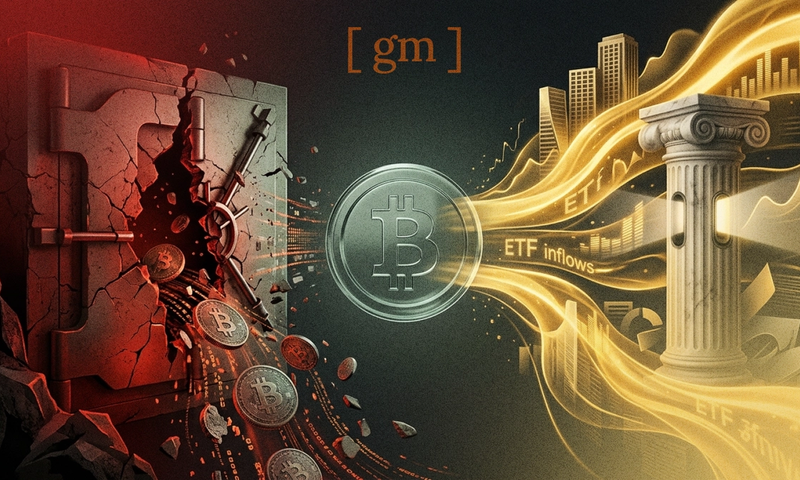
1. The Bitget hack widened to $387.5M, withdrawals resume Monday
The week's biggest story kept developing. Bitget raised its estimated losses from the hot-wallet breach to $387.5 million, up from the initial $351.6M figure, making it one of the largest exchange breaches of 2026. The attack, which began at 18:31 UTC on September 24, involved unauthorized transfers from a limited number of hot wallets; private keys weren't stolen, but the attacker was able to move funds before the breach was contained.
The good news for users: Bitget's substantial User Protection Fund covered the losses, cold wallets stayed secure, and the exchange announced it will resume withdrawals in phases starting September 28 after patching the vulnerability. Over the weekend, blockchain sleuths tracked the attacker dispersing $83 million in stolen XRP across multiple wallets, and the incident tested THORChain's neutrality policy as funds moved cross-chain. North Korea's Lazarus Group has been floated as a suspect, consistent with the pattern of major exchange hacks this year.
2. Bitcoin cooled from $87K, but ETF demand stayed red-hot
Bitcoin's week was a rollercoaster. It surged to a multi-month high around $87,270 on Monday, then retreated below $84,000 as rising US bond yields and a stronger dollar revived rate-hike fears. The $83,000-$84,000 zone has emerged as near-term support, with $85,000-$87,000 the resistance to reclaim.
But underneath the price dip, institutional demand told a bullish story. US spot Bitcoin ETFs pulled in roughly $2.4 billion in net inflows for the week through September 25, their strongest since October 2025, and Friday added another $134 million to extend a multi-day inflow streak (BlackRock's IBIT led with $97M, Fidelity's FBTC added $49M). The takeaway: the pullback was macro-driven profit-taking, not a demand collapse, real money kept accumulating.
3. The SEC clarified what does NOT make a token a security
In a genuinely important statement for the industry, the SEC said on Friday that token buybacks, network upgrades, and marketing claims don't automatically turn a crypto asset into a security. That's a meaningful piece of regulatory clarity: for years, projects worried that routine activities like burning tokens or shipping upgrades could trigger securities classification and enforcement. The SEC signaling otherwise removes a layer of legal uncertainty that has hung over the industry, and it's consistent with the agency's more constructive posture under current leadership.
4. A regulatory shuffle: Peirce departs, Fed drafts stablecoin rules
The regulatory landscape shifted on several fronts. Hester Peirce, the SEC commissioner known as "Crypto Mom" for being the agency's steadiest and most consistent crypto advocate, announced she will leave the SEC on October 2, a notable loss of a friendly voice inside the regulator. Separately, the Federal Reserve proposed its first stablecoin rules under the GENIUS Act, setting reserve, capital, and issuer-eligibility standards (with a 60-day comment window). And the SEC delayed its decision on crypto ETF options from September 27 to November 11, kicking that catalyst down the road.
5. Deals and moves: Kraken, Quant, and the tokenization push
Corporate activity stayed brisk. Payward, the parent of exchange Kraken, agreed to acquire derivatives firm Bitnomial for $550 million, expanding its regulated-derivatives footprint. Quant (QNT) jumped more than 70% after The Clearing House selected it for an on-chain money initiative targeting tokenized deposits by the first half of 2027. And the tokenization theme kept building: the ECB advanced preparatory work on investing in tokenized securities, Coinbase's tokenized stocks went live on Aave V4, and BlackRock suggested AI agents could become a major new source of stablecoin demand.
6. Quick hits
- Strategy (formerly MicroStrategy) proposed switching its preferred shares (STRC, STRF, STRK, STRD) to a daily-dividend structure, accruing every calendar day including weekends, with a shareholder vote set for October 28.
- Brazil's central bank will require reporting on self-custody wallet transfers of $10,000 or more starting October 1.
- Bybit published a "Restricted Counterparty List" naming sanctioned platforms and entities including the Lazarus Group, a notable industry move toward blacklisting bad actors.
- A Zcash-style "shielded Bitcoin" proposal gained attention among developers, though it remains research, not a confirmed protocol upgrade.
The bottom line
The weekend captured crypto's split personality in 2026. On one side, real risk and volatility: a $387M exchange hack and a Bitcoin pullback on macro fears. On the other, a maturing, institutionalizing market: record ETF inflows, helpful regulatory clarity from the SEC, the Fed building a stablecoin framework, and hundreds of millions in deals flowing into regulated infrastructure. The price cooled, but the structural story, institutions accumulating, rules taking shape, and infrastructure consolidating, kept moving forward. Heading into a new week, the questions to watch are whether Bitcoin holds its $83K-$84K support, whether Bitget's phased withdrawals restore user confidence, and whether ETF inflows keep defying the macro headwinds.
This is educational information, not financial advice. Crypto is highly volatile; prices and figures cited are as of publication and will change. Always do your own research.