For decades, the name Donald Trump has been synonymous with concrete, steel, and luxury real estate. However, the U.S. Office of Government Ethics' release of the President’s certified 2025 financial disclosure report shows a massive structural pivot in the engine driving his multi-billion-dollar fortune. Spanning a massive 927 pages, the document details how digital assets have overwhelmingly eclipsed his traditional real estate revenue, turning the sitting president into one of the world's most prominent crypto magnates.
According to the filing, Trump's total income for his first full year back in the White House surpassed $2.2 billion, with his underlying assets valued at a minimum of $2.4 billion. Astoundingly, more than $1.4 billion of that haul came directly from cryptocurrency holdings, token launches, licensing rights, and blockchain-based ventures.
Breaking Down the Billion-Dollar Crypto Portfolio
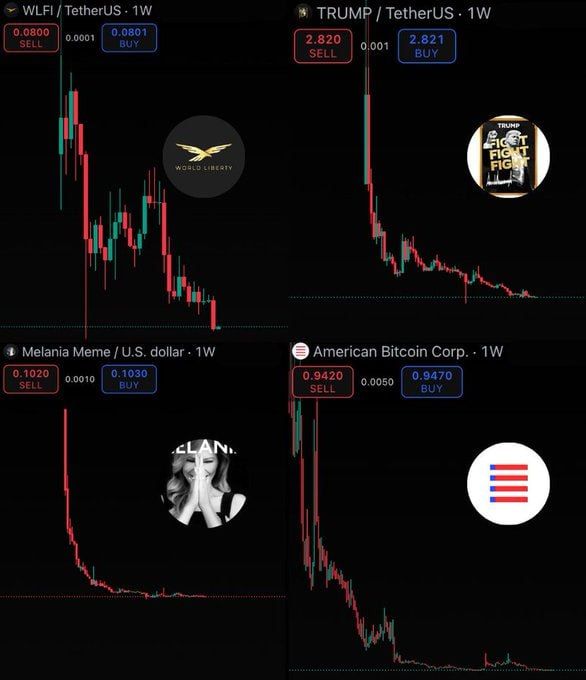
The breakdown of Trump’s digital asset revenue showcases aggressive monetization across multiple sectors of the Web3 landscape:
- $635.1 Million (Royalty Income): Sourced via CIC Digital LLC through a lucrative licensing agreement with "Celebration Coins" for the Solana-based meme coin $TRUMP, which launched just days before his second inauguration.
- $236.3 Million (Token Sales): Realized from the public and private sales of WLFI, the native governance token of World Liberty Financial, a decentralized finance project co-founded alongside his sons.
- $196.9 Million (Stablecoin Equity): Generated through a highly successful equity stake sale in Stablecoin Holdco, the entity behind the dollar-pegged USD1 stablecoin.
- $65.6 Million (Corporate Equity): Raised via the strategic sale of partial ownership shares in DT Marks DeFi LLC, the controlling parent entity of World Liberty Financial.
- $6.0 Million (Digital Collectibles): Brought in via continuous royalties from Melania Trump’s ongoing NFT collections and physical branded merchandise line.
- $1.82 Million (Staking Rewards): Native onchain yields generated completely passively by validating transactions on the Ethereum blockchain through a Coinbase institutional staking portal.
By comparison, Trump’s traditional business empire brought in a baseline of roughly $620 million in real estate, hotel, and golf-related income—including $121 million from Trump National Doral and $77 million from his Mar-a-Lago resort. The President also engaged in highly active asset management outside of crypto, filing thousands of individual stock transactions on major tech giants like Nvidia, Apple, and Microsoft.
Policy, Profits, and the Broader Administration
The timing of these astronomical financial wins comes at a period when the Trump administration has been actively pushing to establish the United States as the undisputed "crypto capital of the world." Legislative breakthroughs like the passage of the GENIUS Act, alongside an intentional rollback of aggressive SEC and DOJ regulatory enforcement, have heavily catalyzed the broader digital asset market.
Responding to media inquiries regarding potential conflicts of interest, White House spokesperson Anna Kelly stated directly:
"Neither the President nor his family has ever engaged—or will ever engage—in conflicts of interest. All actions by President Trump and his administration are taken in the best interest of the American people."
The pro-crypto stance is echoed further down the executive ladder. Vice President J.D. Vance’s recently certified public disclosure forms (OGE Form 278e) revealed that he, too, maintains skin in the digital game. Vance reported a Coinbase-held Bitcoin portfolio currently valued between $250,001 and $500,000. Vance's position has climbed steadily, rising from an initial Senate filing of $100,001–$250,000 in 2022, proving that institutional crypto conviction sits at the very top of the modern American executive branch.