Crypto sold off on Tuesday after the United States launched fresh airstrikes on Iran, sending oil prices surging and pulling capital out of risk assets worldwide. But the reaction across crypto was uneven, and the details tell a more interesting story than the headline drop.
What happened
US Central Command confirmed it began striking Islamic Revolutionary Guard Corps (IRGC) targets in Iran at 12 p.m. ET on September 1, describing the operation as retaliation for recent IRGC attempts to mine the Strait of Hormuz and an attack on US forces in the region. President Trump called the strikes "large and powerful" and warned that any Iranian retaliation would be met at a "much harder and higher level." Iran responded within hours, launching ballistic missiles at a US Marine installation in Jordan; Jordanian media reported eight incoming missiles were intercepted.
Markets reacted immediately. Brent crude surged toward $95 a barrel, its highest in about three months, on fears of disruption to the Strait of Hormuz, the waterway through which a large share of the world's oil flows. US stocks fell to their lowest since early August, and bond yields climbed.
How crypto reacted
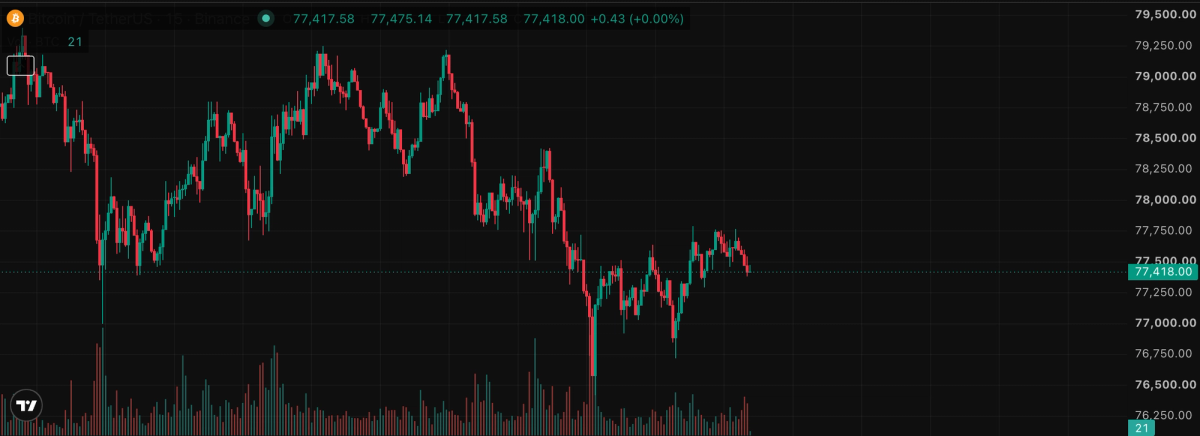
Bitcoin slid to around $76,800, down from roughly $78,000 before the strikes, while Ethereum broke below the $2,400 level. According to CoinGlass, roughly $115 million in leveraged long positions were liquidated in a single hour, traders who had bet on higher prices, forced to close as the market dropped.
But the selloff didn't land evenly, and that's the part worth noting. Solana and Tron each fell more than 3%, while Bitcoin gave up only about 1%. That spread is typical of a risk-off shock: traders dump the fastest-moving, higher-beta assets first and leave the base layer relatively intact. In other words, the market cut its riskiest positions rather than fleeing crypto entirely, a sign of caution, not panic.
Why crypto fell
The mechanism is straightforward. Bitcoin still trades largely as a high-risk, liquidity-sensitive asset, so when a geopolitical shock sends investors toward safety, crypto tends to fall alongside stocks. The oil spike adds a second layer: sustained higher energy prices feed into inflation, which complicates the Federal Reserve's path, and that matters enormously right now. Markets were already pricing a roughly 66% chance of a Fed rate hike in September after Chair Kevin Warsh's hawkish Jackson Hole remarks. A war-driven oil surge only strengthens the case for tighter policy, a double headwind for risk assets.
The wrinkle: a big buyer stepped into the dip
Even as retail longs were liquidated, one of crypto's largest players moved the other way. Strategy (formerly MicroStrategy) disclosed it had bought 4,603 BTC for about $369 million, resuming its Bitcoin accumulation after a two-month pause, right as the market wobbled. It's a reminder that geopolitical selloffs, which tend to be driven by leverage and fear, often look very different to long-term accumulators than to short-term traders.
The bigger picture
For context, this isn't the first time crypto has weathered US-Iran tension in recent months, and Bitcoin's relatively contained 1% drop, versus sharp moves in oil and equities, suggests the market has grown somewhat desensitized to these shocks. Still, the timing is delicate: the strike lands just as crypto faces a packed September of macro catalysts, including a Senate vote on the CLARITY Act and the Fed's rate decision, both mid-month. Geopolitics has now added another variable to an already pivotal stretch, and for now, the market is trading defense.
This is a developing story; figures are as of publication and moving quickly. This is educational information, not financial advice. Always do your own research.