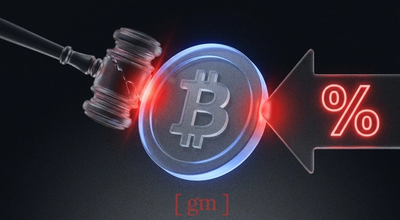
American crypto regulation took a decisively friendlier turn on Monday. In the span of a single day, the US Treasury withdrew two long-pending proposals that would have ramped up surveillance of crypto mixers and self-custody wallets, while the CFTC moved to open a federal path for leveraged retail crypto trading. Together, the moves mark one of the clearest pro-crypto regulatory shifts yet under the current administration. Here's what happened and what it means for you.
Treasury kills two surveillance proposals
The Treasury's Financial Crimes Enforcement Network (FinCEN) withdrew two proposed rules on October 5, saying it will take no further action on them:
The crypto mixing rule (from 2023). This proposal had labeled international crypto mixing a "primary money laundering concern" and would have forced banks and financial institutions to file detailed reports on mixing transactions, down to wallet addresses, transaction hashes, and even IP addresses. FinCEN withdrew it citing concerns the rule's broad definition of "mixing" could have a "chilling effect on legitimate activity,", meaning ordinary people using privacy tools for legitimate reasons would get swept up.
The self-custody wallet rule (from 2020). First proposed in the final weeks of the previous Trump administration, this rule would have required financial institutions to verify identities and report certain transactions over $3,000 and $10,000 involving self-custody ("unhosted") wallets. It too is now dead.
Crucially, this doesn't remove existing anti-money-laundering law, the Bank Secrecy Act and current AML rules still apply, and FinCEN can still target specific services linked to illicit finance. What's gone is the additional, broad reporting regime that privacy advocates and the crypto industry had fought for years.
CFTC opens a path for leveraged crypto trading
On the same day, the Commodity Futures Trading Commission moved in a parallel pro-industry direction, proposing a federal framework for leveraged retail crypto trading and opening a path for federally-regulated leveraged crypto exchanges. Leveraged trading lets users bet with borrowed money to amplify positions (and risk), and until now, the US has lacked a clear federal framework for offering it to retail traders in crypto.
Notably, this comes after the CLARITY Act failed in the Senate. With comprehensive market-structure legislation stalled, the CFTC is stepping in to shape crypto policy through its own rulemaking, exactly the "regulation by agency action" dynamic that fills the vacuum when Congress can't pass a law.
Why these moves matter
Read together, Monday's actions represent a genuine philosophical shift in how Washington approaches crypto, from restriction toward accommodation. The Treasury framed its withdrawals as part of the administration's effort to ensure digital-asset rules are "fit for purpose."
For privacy, it's a clear win. The withdrawn rules would have created a dedicated federal reporting regime around privacy-enhancing tools and self-custody, crypto's core principle of financial independence. Removing them reduces the risk that ordinary, legitimate privacy activity automatically triggers surveillance. It fits a broader pattern: Treasury also removed the Tornado Cash mixer from its sanctions list in 2025 after courts challenged the government's authority.
For leveraged trading, it's more double-edged. A clear federal framework brings leveraged crypto trading onshore with regulatory oversight, which is better than it happening on unregulated offshore platforms. But leverage is also how most retail traders lose money fast, amplified bets cut both ways. More accessible leveraged crypto trading means more opportunity and more risk for everyday users, so the "easing up" here comes with a genuine caution.
Why it matters
Monday was a landmark day for US crypto regulation, not because of one dramatic law, but because two agencies moved in the same friendly direction at once. The surveillance state around crypto privacy got rolled back, and the door to regulated leveraged trading opened. For an industry that spent years complaining about a hostile, uncertain US regulatory environment, this is the clearest signal yet that the climate has fundamentally changed. The caveats are real, existing AML law still applies, leverage is dangerous for retail, and agency rules can be reversed by a future administration (which is exactly why the industry still wants durable legislation). But the direction is unmistakable: US regulators are easing up on crypto, and Monday's double-move is the proof.